

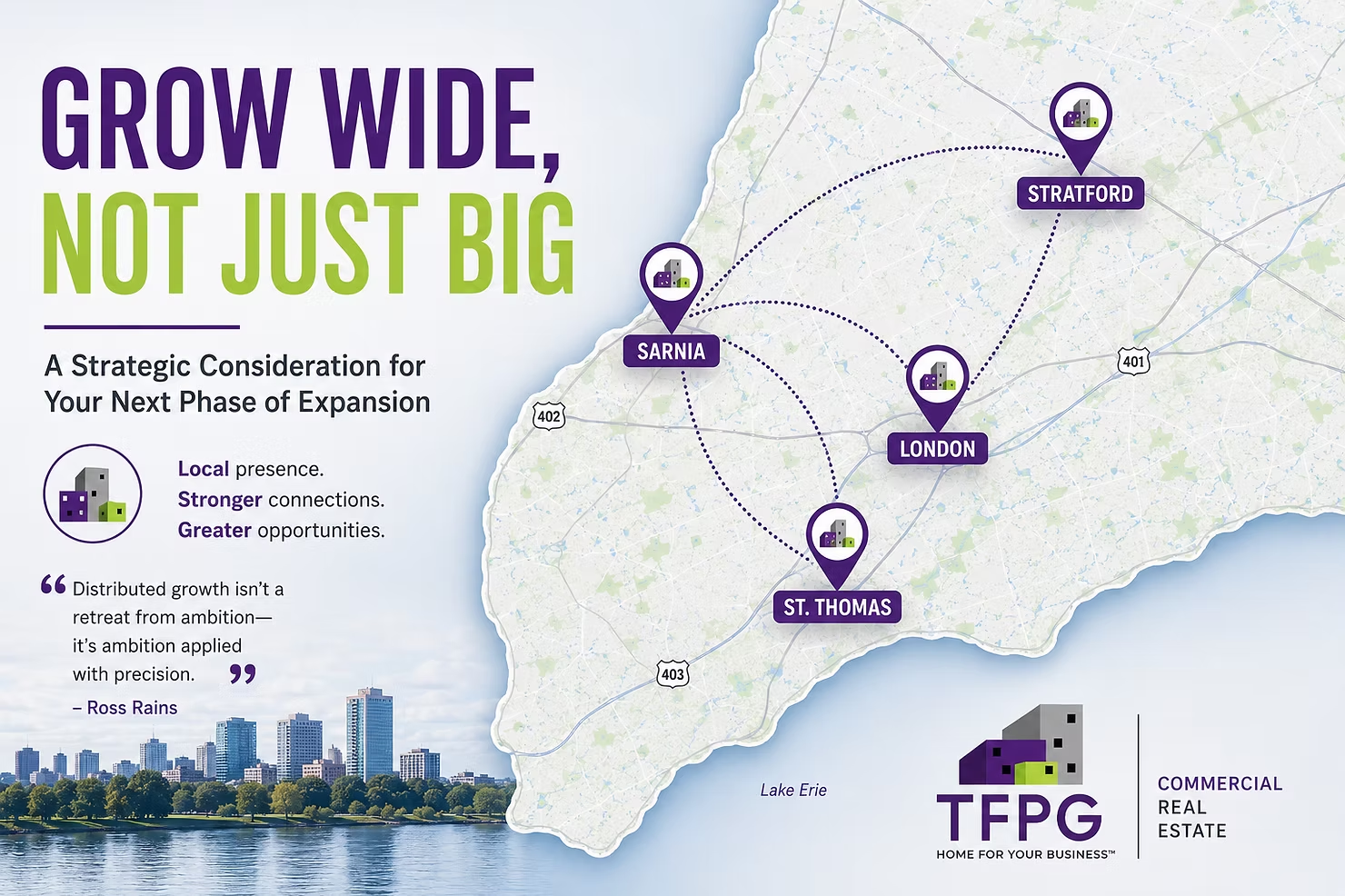
Distributed Growth vs. Centralized Growth
A Strategic Consideration for Your Next Phase of Expansion
When business owners think about growth, they often picture a larger headquarters, more square footage, and a bigger central operation. But growth doesn’t always have to mean getting bigger. Sometimes the smartest growth strategy is to grow wider. For professional service firms, healthcare providers, consultants, and care-giving organizations, distributed growth can create greater reach, stronger recruitment advantages, and lower operational risk than investing heavily in a single location.
At The Focal Point Group, we work with organizations across Southwestern Ontario that are evaluating how and where to expand. In many cases, opening smaller satellite offices in strategic communities can create more long-term value than simply enlarging an existing headquarters.
What Does It Mean to Grow Wide?
Growing big means concentrating resources into one larger location. Growing wide means expanding your presence across multiple communities, bringing your services closer to both your clients and your workforce. Instead of one 10,000-square-foot office, imagine three strategically placed 3,000-square-foot locations serving different markets. The total footprint may be similar, but the impact can be significantly greater.
1. Go Where Your Professionals Already Live
Talent is no longer concentrated in one city. Many professionals across Southwestern Ontario live in communities such as London, Stratford, St. Thomas, Woodstock, Chatham, and Sarnia. Asking employees to commute long distances every day creates friction, limits recruitment opportunities, and can contribute to turnover. A distributed office strategy places your organization closer to existing talent pools. By reducing commute times and offering local work options, businesses often gain access to stronger candidate pools while improving employee satisfaction and retention.
In today’s competitive labour market, convenience matters.
2. Serve Clients in Their Own Communities
Clients increasingly value accessibility and local presence. Whether you’re providing healthcare services, counselling, financial advice, legal services, or other professional support, proximity often influences client experience. Satellite offices reduce travel barriers, increase convenience, and demonstrate a commitment to the communities you serve. Being physically present in a market sends a powerful message: “We’re invested here.” For relationship-driven businesses, that local connection can become a meaningful competitive advantage.
3. Reduce Concentration Risk
Every growth strategy carries risk. When all operations are concentrated in a single location, market shifts, lease challenges, staffing shortages, or economic changes can have a greater impact on the organization. Distributed growth spreads that risk.
It also creates opportunities to enter underserved markets where demand may be stronger and competition less intense.
For example, a business headquartered in St. Thomas may discover opportunities to establish a small satellite office in Sarnia, Stratford, or another growing market at a relatively modest monthly cost. Testing a new market doesn’t always require a major investment. Sometimes a small, strategic presence is enough to validate demand before making larger commitments.
4. Right-Size Every Location
One of the greatest advantages of growing wide is flexibility. Smaller offices are often easier to lease, less expensive to furnish, and quicker to establish than large centralized facilities. Each location can be tailored to the specific needs of that market while scaling independently as demand grows. Short-term lease options can provide an opportunity to test a market, while staggered lease maturities across multiple locations create greater flexibility for future planning. This allows businesses to expand thoughtfully rather than making one large, irreversible commitment. The team at The Focal Point Group regularly works with organizations to identify office solutions that support both immediate needs and long-term growth objectives.
5. Strengthen Your Regional Brand Presence
There is a difference between being known in a city and being known across a region.
A business with locations in multiple Southwestern Ontario communities communicates something important to clients, partners, referral sources, and stakeholders: This organization has reach. Multiple locations signal stability, growth, accessibility, and commitment to the communities you serve. For organizations seeking partnerships, funding opportunities, or referral relationships, a broader geographic footprint can become a strategic asset.
6. Take Advantage of Today’s Market Conditions
While property ownership costs remain elevated, office leasing opportunities continue to exist across many Southwestern Ontario markets. Businesses willing to think strategically can still find quality office space at attractive rates compared to historical norms. Market conditions won’t remain static forever. Organizations that secure well-positioned locations today may benefit from both operational flexibility and long-term cost certainty in the years ahead. If you’re exploring expansion opportunities, contact the team at [email protected] to learn more about the TFPG Branch Office Program and how it can help get you started in a new location without the risk.

The Bottom Line
Growth isn’t always about building bigger. Sometimes the strongest businesses are built by expanding strategically, entering new markets thoughtfully, and creating multiple points of connection with both employees and clients. Growing wide allows organizations to increase their reach, strengthen their brand, reduce risk, and improve accessibility—all while maintaining the flexibility to adapt as markets evolve.
Distributed growth isn’t a retreat from ambition.
It’s ambition applied with precision.
Written by Ross Rains
Contact our team today or Book a Showing at one of our properties to find a Home For Your Business.
